
How to Choose the Best Footwear for Indian Ethnic Outfits: A Complete Guide
Why Footwear Matters as Much as the Outfit
Think of an ethnic outfit as a composition; the footwear is its final note. A simple cotton kurta feels considered with a well-crafted jutti; a flowing saree looks more contemporary with a sleek mule; a heavily embroidered lehenga may need the quiet confidence of a flat, while a minimalist Anarkali can carry an embellished heel. There's no single rule; it comes down to balance.
Before choosing, ask:
- What's the mood of the outfit? Relaxed, festive, formal or dramatic?
- How much visual weight does it carry? Heavy embroidery needs a different companion than airy cotton.
- How long will you wear it? A wedding and a quick dinner call for very different practicalities.
Common Styling Mistakes to Avoid
The most common mistake is trying too hard to match a gold outfit, gold shoes, gold bag, gold jewellery. Sometimes it works; often it flattens the contrast. Instead, pick one detail and let it travel: a champagne heel echoing a saree's border, a jewel-toned jutti pulling a thread from the embroidery, a tan Kolhapuri grounding a colourful outfit. Styling isn't about matching everything, it's about making everything belong together.
Which Types of Ethnic Footwear Should Every Woman Own?
A versatile wardrobe doesn't need twenty pairs, just the right few.
Juttis: The everyday staple
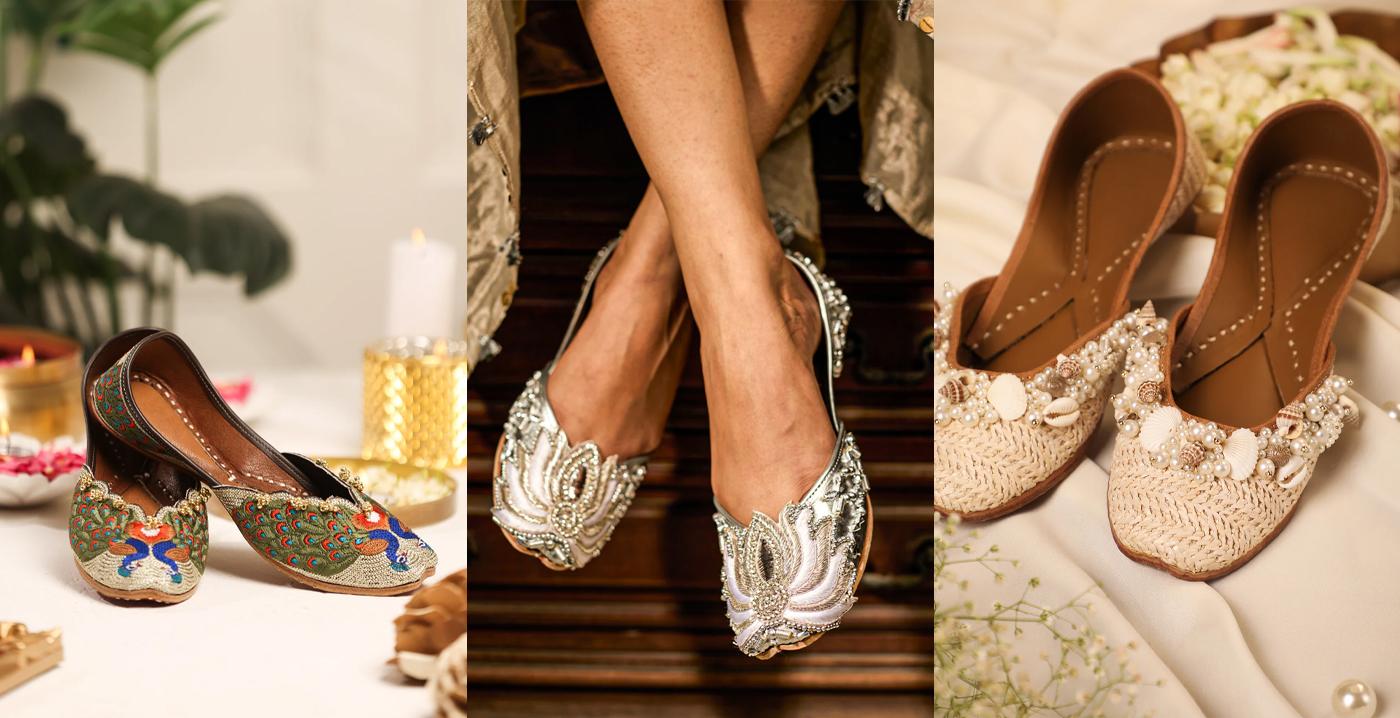
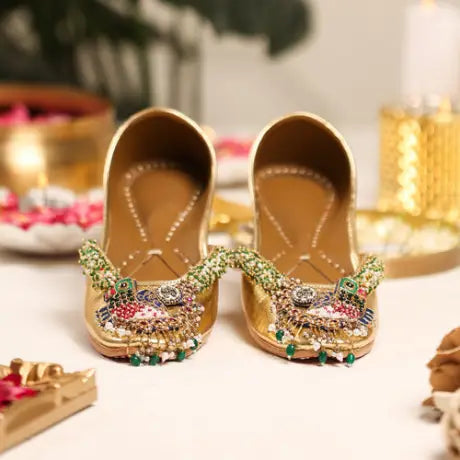
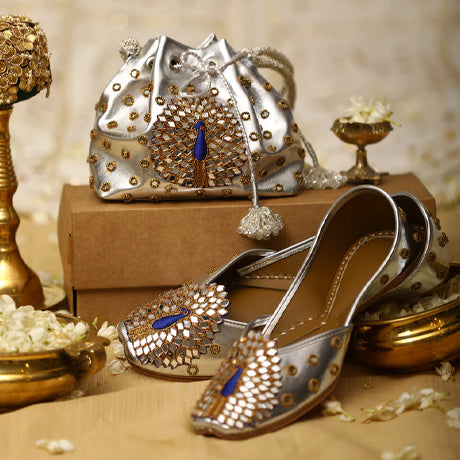
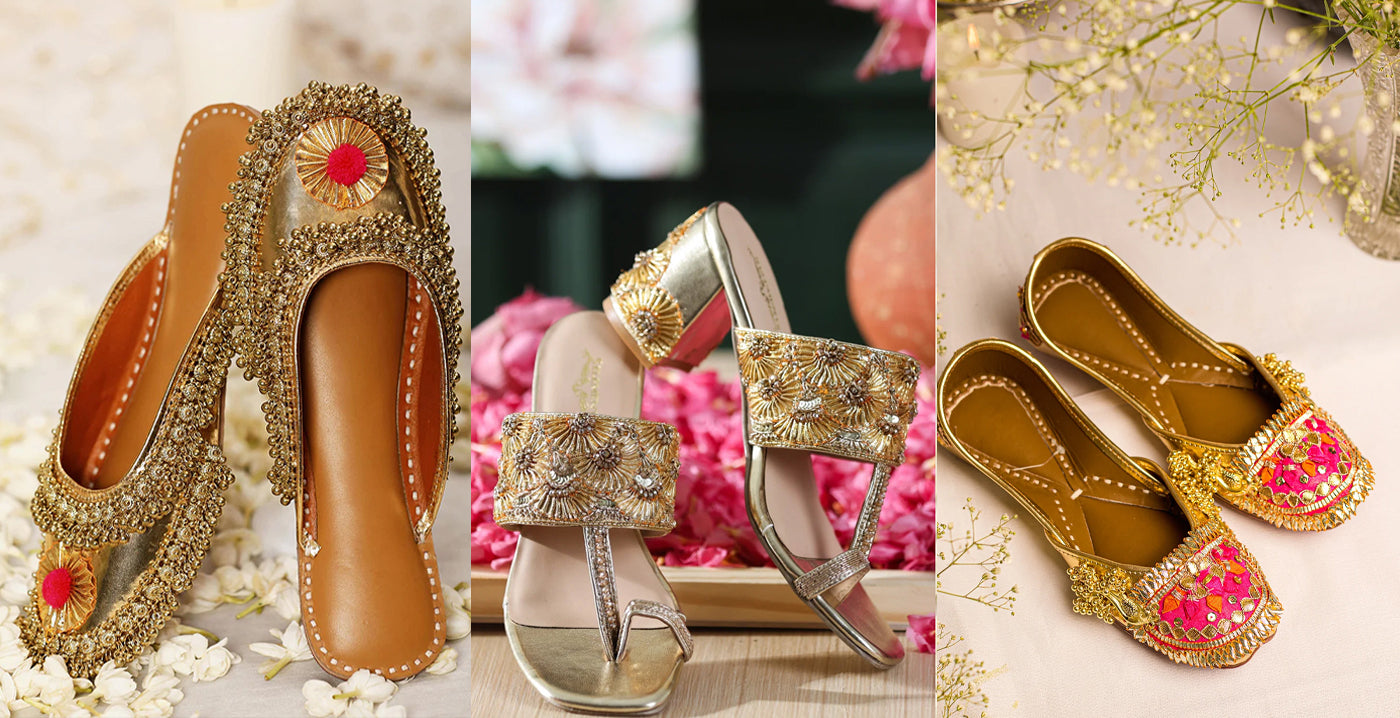
Traditional without feeling dated, decorative without being dramatic, and comfortable enough for daily wear. They suit kurta sets, Anarkalis, shararas, sarees, lehengas, Indo-Western outfits, even trousers and dresses. A simple pair becomes an everyday essential; an embroidered one can steal a festive look. At 5 Elements by Radhika Gupta, the jutti becomes a canvas for craftsmanship, reworked through colour, embroidery and silhouette for the modern wardrobe.
Mojaris: Pointed-toe elegance
Sharper on occasion than the jutti, the pointed silhouette elongates the foot. Pair it with a straight kurta, churidar or richly detailed Anarkali traditional, but never predictable.
Kolhapuris: Traditional and effortless
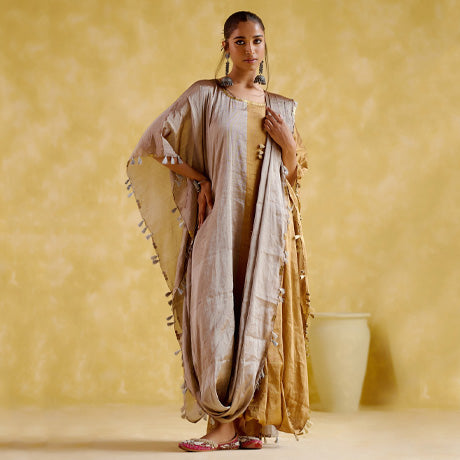
Beautiful with handloom sarees, cotton kurtas and relaxed silhouettes, though modern versions work into festive dressing too. Let them breathe; they suit outfits that aren't overly constructed.
Ethnic heels: Adding Height and Elegance
Sarees, lehengas and formal silhouettes benefit from heels, which change posture, proportion and the fall of the garment. Choose according to your evening, not your mirror. If you'll be standing and dancing for hours, stability matters.
Mules and wedges: Contemporary comfort
They sit between worlds, carrying embroidery and embellishment on a modern silhouette. They work well with co-ords, modern sarees, palazzos and Indo-Western dressing.
How to Choose Footwear Based on Your Outfit
Best Footwear for Sarees
Give the most freedom. Traditional silk or Banarasi sarees suit embellished juttis, elegant heels or refined Kolhapuris; cotton and handloom sarees pair naturally with simpler handcrafted flats; organza, chiffon or contemporary drapes suit a sleek mule or delicate heel. Tip: decide your footwear before finalising the saree length, since heel height changes how the drape falls.
Best Footwear for Kurta Sets and Co-ords
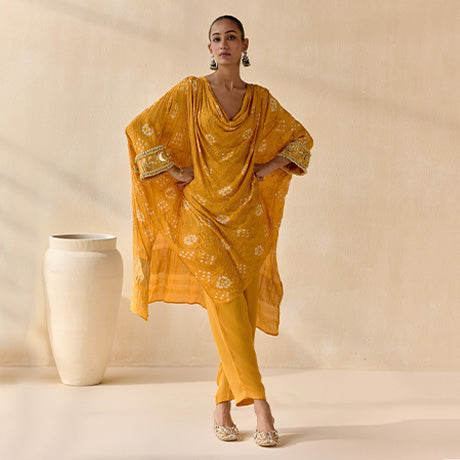
Where juttis shine: a straight kurta takes a pointed mojari, a relaxed set pairs with a Kolhapuri, a contemporary co-ord sharpens with a mule.
Best Footwear for Lehengas and Anarkalis
These don't need a heel by default. A block heel or wedge adds height for longer skirts, but an ornate jutti works just as well when comfort matters more.
Best Footwear for Sharara and Palazzo Sets
They are about movement, so footwear shouldn't fight the hemline: juttis, mules and stable heels all work, and a little height helps heavily flared palazzos sit cleaner.
Best Footwear for Fusion Ethnic Wear
Let's set the rules aside: a handcrafted jutti with tailored trousers, a metallic mule with a draped skirt, a Kolhapuri with a crisp shirt and palazzos.

Choosing Footwear by Fabric, Not Just Outfit
- Cotton and everyday fabrics call for ease juttis, Kolhapuris and simple mules, with restraint as the guiding idea.
- Silk, Banarasi and heavy festive fabrics can handle richness at the feet, embellished heels, detailed juttis and metallic finishes echo brocade and Banarasi weaves. Just don't let every detail compete: if the saree has heavy zari, let the footwear pick up the metallic tone without repeating the whole pattern.
- Organza, chiffon and shimmer fabrics already bring movement and light, so keep footwear lighter delicate heels, refined mules or softly embellished flats.
- Velvet and winter wear carry presence: antique gold, jewel tones and richer textures sit well beside them, allowing footwear to be a little more dramatic.

How to Choose Footwear Based on the Occasion
- For Everyday and Casual Ethnic Wear: Comfort leads juttis, Kolhapuris or easy mules.
- For Office and Semi-Formal Styling: Keep detailing refined a polished jutti or understated mule adds personality without feeling festive.
- For Festive celebrations: Bring in metallics, embroidery, jewel tones, handcrafted detail or statement heels a little shimmer is often enough.
- Weddings and Bridal Occasions: Footwear needs to photograph well, suit the outfit, and survive hours of movement. Guests have flexibility with embellished juttis, wedges, Kolhapuris or heels for brides, comfort deserves equal billing with beauty, since the shoes you forget you're wearing are usually the ones you chose best.
Comfort vs Style: Why Not Both?
- Start with fit: look for a secure hold without pinching, room around the toes, comfortable lining, and a sole that allows natural movement.
- Be realistic about heel height. There's a real difference between a heel you admire and one you can live in for six hours. Block heels and wedges offer more stability for long celebrations.
- Materials matter the upper, lining, sole and finishing shape how a shoe feels, not just how it photographs.
- Handcrafted footwear stands apart, carrying something machine production can't replicate the human hand. At 5 Elements, that philosophy runs through the brand's Panchtatva inspiration: craftsmanship, fluidity, boldness, comfort and timelessness working together.
Juttis vs Heels vs Kolhapuris vs Mules
- Want comfort and everyday versatility? Juttis.
- Want height and formal elegance? Heels.
- Want effortless traditional charm? Kolhapuris.
- Want contemporary styling? Mules.
There's no single winner, just the pair that understands the outfit, the occasion, and the woman wearing it.
Matching Colours and Embellishments
Matching is safe; contrast is often more interesting. A blush outfit with antique gold footwear can feel more luxurious than exact pink-on-pink. A deep green ensemble comes alive with champagne or gold; ivory takes almost anything.
Metallics gold, champagne, silver, antique finishes are the hardest-working shades in an ethnic wardrobe, moving between outfits without feeling repetitive. If the outfit is already covered in sequins or zari, ask whether the footwear needs to match that intensity, or stay quietly out of the way. Neutrals like tan, ivory and champagne are what you reach for when you're running late and still want to look put together.

What to Avoid When Choosing Ethnic Footwear
- Mismatched formality Casual footwear with an elaborate bridal outfit, or an ornate heel with a simple daytime kurta.
- Unstable heels Especially on uneven surfaces or during long ceremonies and dancing.
- Neglected footwear Loose embellishments, worn soles, scuffing and poor storage.
- Discomfort chosen purely for fashion Fashion is meant to be lived in.

Expert Styling Tips for Ethnic Footwear
Weddings: Try footwear with the actual outfit, walk in it, sit in it, check the hem.
Festive wear: Let footwear pick up one detail from the outfit instead of echoing everything.
Everyday looks: Build around versatile pairs that work across silhouettes.
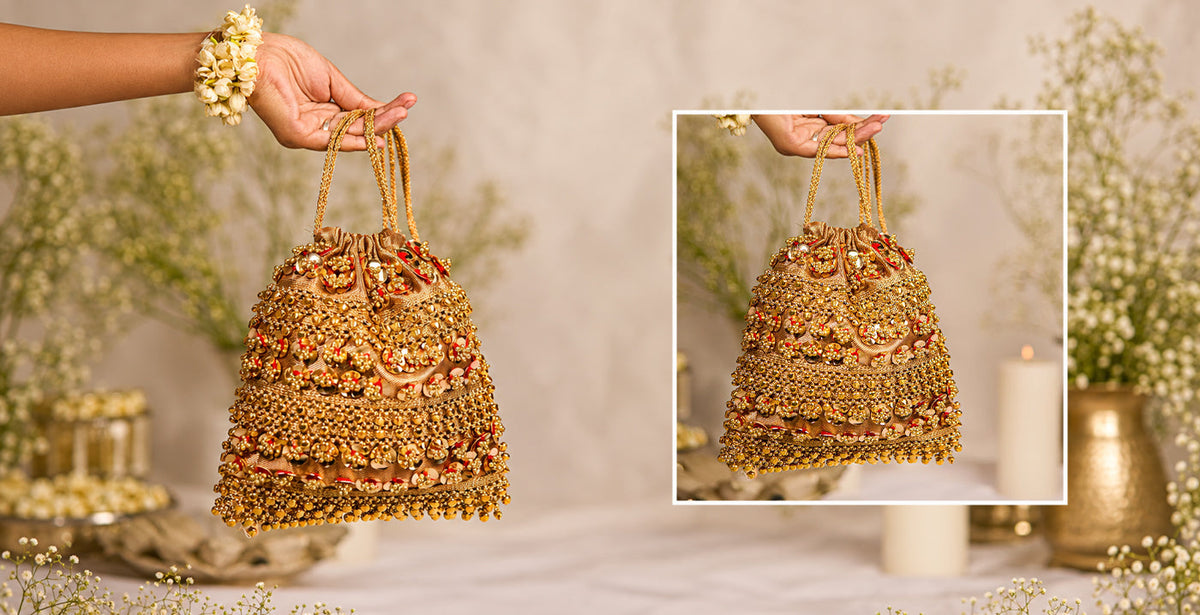
Accessories: Footwear doesn't need to match your bag exactly to create a connection instead, like a metallic thread echoing a clutch or a colour repeating in the jewellery. Coordination is subtler than matching.
How to Care for Ethnic Footwear
- Juttis and Mojaris: Keep dry, wipe gently after use, store to protect shape and embroidery.
- Kolhapuris: Avoid prolonged moisture, let the leather breathe between wears.
- Embellished heels and mules: Store separately, ideally in dust bags.
What to Look for When Buying Ethnic Footwear Online
A photograph can't tell you everything. Before buying, look for clear material and craftsmanship details, close-up photos of embroidery and finishing, a detailed size chart, sole and construction information, care instructions, and a clear return policy.
Genuine, handcrafted pieces often carry subtle variations, evidence of the hand behind the work, not a flaw. At 5 Elements, that story traces back to founder Radhika Gupta's design journey, rooted in Indian handicrafts and heritage; since 2005, the label has carried that influence into luxury footwear and accessories. Never assume your usual size fits identically across silhouettes, closed juttis, mojaris, mules and heels can all fit differently, so check the size guide before buying.
Final Thoughts
So, what is the best footwear for ethnic wear? It changes with the outfit, the fabric, the occasion, the woman wearing it. A jutti might be right one morning, a Kolhapuri the next, a statement heel for a wedding, a mule when tradition needs a modern twist. The goal isn't to own every kind of footwear, it's to build a collection that gives you options.
At 5 Elements by Radhika Gupta, that idea sits at the heart of the brand: Indian craftsmanship staying rooted while continuing to evolve. Perhaps that's why the right pair stays with us not because it simply matched the outfit, but because it became part of the memory.
Frequently Asked Questions
Q: What is the best footwear to wear with a saree?
Depending on fabric and occasion juttis and Kolhapuris suit cotton and traditional sarees, while heels and mules suit formal or contemporary drapes.
Q: Which footwear is best for kurta sets?
Juttis are the most versatile; Kolhapuris and mules work well with relaxed or contemporary silhouettes.
Q: Are juttis comfortable for all-day wear?
A well-fitted, well-cushioned jutti can be comfortable for all-day wear. Always check the fit before wearing it for a long event.
Q: Can I wear heels with ethnic outfits?
Yes, with sarees, lehengas, Anarkalis and formal festive outfits choose height based on wear time.
Q: Are Kolhapuri chappals suitable for weddings?
Yes, contemporary, embellished or metallic Kolhapuris suit daytime weddings and festive gatherings.
Q: Which footwear is best for lehengas?
Juttis, wedges and block heels, depending on the lehenga's length and how much movement you need.
Q: What colour footwear goes with most ethnic outfits?
Gold, champagne, silver, ivory and tan are the most versatile neutrals.
Q: What footwear should be avoided with heavy ethnic outfits?
Anything too casual, unstable heels, or overly embellished shoes when the outfit already has heavy detailing.
Q: Can ethnic footwear be styled with Indo-Western outfits?
Yes juttis, Kolhapuris and mules add an Indian craft element to trousers, dresses, skirts and co-ords.
Q: What should I look for when buying handcrafted footwear online?
Craftsmanship, materials, construction, sizing, close-up images, care instructions, and the return policy.